
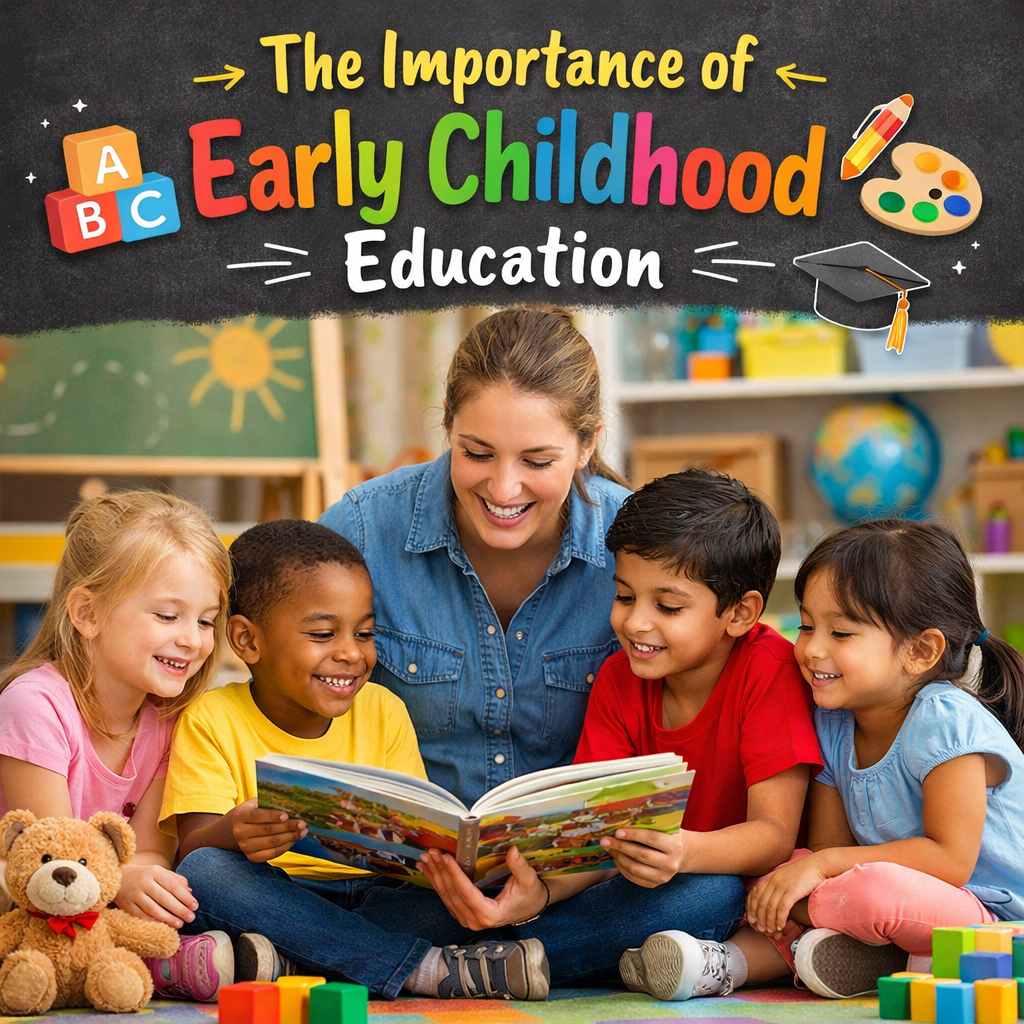
The Importance of Early Childhood Education
Early childhood education is one of the most important stages in a child’s development. The first few years of life, especially from birth to six years, are critical for brain growth and learning. During this period, children absorb information quickly and develop essential skills that influence their future education and personality.
Providing children with a structured and nurturing learning environment through preschool and kindergarten programs helps them build a strong foundation for lifelong success.
Building a Strong Learning Foundation
Early education introduces children to basic academic concepts such as letters, numbers, colors, shapes, and simple problem-solving skills. These activities prepare children for primary school and help them develop curiosity about learning.
Through play-based learning, storytelling, and interactive activities, children develop their cognitive abilities while enjoying the learning process.
Social and Emotional Development
One of the biggest advantages of early childhood education is the development of social and emotional skills. In a preschool environment, children learn how to interact with others, share, cooperate, and express their emotions in a healthy way.
These experiences help children build confidence, develop friendships, and understand the importance of teamwork and respect.
Development of Communication Skills
Language development is another key benefit of early education. Children learn new words, improve their vocabulary, and practice speaking through conversations, rhymes, songs, and storytelling activities.
Good communication skills help children express their thoughts clearly and understand instructions, which is essential for academic success.
Encouraging Creativity and Imagination
Creative activities such as drawing, painting, music, dance, and role-playing allow children to explore their imagination. These activities not only make learning enjoyable but also help develop problem-solving skills and innovative thinking.
Creativity plays an important role in a child’s overall development and encourages them to think independently.
Promoting Independence and Confidence
When children attend kindergarten, they start learning how to complete simple tasks independently. Activities such as organizing their materials, following routines, and participating in classroom activities help them develop responsibility and confidence.
These small achievements help children feel proud of themselves and motivate them to take on new challenges.
Preparation for Future Academic Success
Studies show that children who attend quality early childhood education programs perform better in school. They develop strong learning habits, better concentration, and improved problem-solving skills.
Early education also prepares children to adapt to structured learning environments and classroom settings.
Conclusion
Early childhood education plays a vital role in shaping a child’s future. It supports intellectual growth, emotional development, social skills, and creativity. By providing a positive learning environment during the early years, parents and educators help children develop the skills they need to succeed in school and life.
Investing in early education ensures that children grow into confident, curious, and capable learners ready to explore the world around them.
